
The Schließanlage: Why a Lost Key Costs More
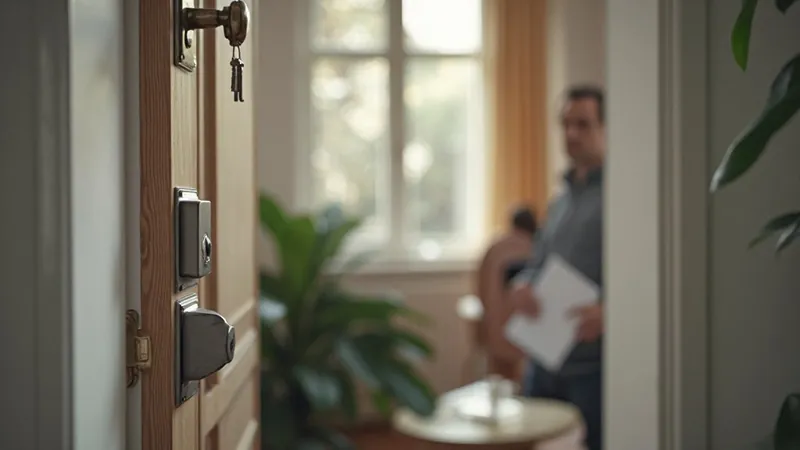
If you rent an apartment in Germany, you've likely encountered a central locking system (Schließanlage), where your apartment key operates not just your front door, but also the building entrance and sometimes communal areas. This convenience comes with an important caveat: losing a key to this system is far more expensive than replacing a standard lock, and the cost often falls on the tenant. Understanding why, and what your rights are, can save you significant money and stress.
German landlords (Vermieter) invest in central locking systems to maintain security across the entire building. When you lose a key, the whole system's integrity is compromised, which is why replacement isn't simply buying a new key—it's why the locksmith must rekey the entire Schließanlage for all residents and the landlord's master key.
How Central Locking Systems Work in Germany
A Schließanlage is a master key system where a single lock mechanism serves multiple doors with different keys. Your apartment key opens your flat door, and the building entrance key opens the front gate or main door. The landlord or Hausmeister (caretaker) holds a master key that opens everything. In many buildings, the system also controls access to the garage, cellar, or bin room.
The system uses a sophisticated mechanical arrangement: each lock cylinder is pinned differently so that only certain keys operate it. When you lose your key, the landlord cannot simply change your lock cylinder in isolation—to prevent someone with a lost key from accessing the building, the entire Schließanlage must be rekeyed. This means replacing multiple lock cylinders and issuing new keys to all tenants.
- Your apartment lock must be changed
- The main entrance lock must be changed
- Any shared facility locks (garage, cellar, laundry room) must be changed
- New keys must be cut and distributed to every tenant
- The landlord's master key system must be reconfigured
Why the Cost Falls on You—and What Your Contract Says
In Germany, lost keys are typically considered tenant damage (Verschleiß or negligence), not normal wear. Your rental contract (Mietvertrag) almost always includes a clause making you liable for the cost of replacing a lost key. This is legally permissible because you have a duty of care over items the landlord has entrusted to you—keys are considered your responsibility.
The exact liability depends on your contract terms and your landlord's interpretation. In many cases, 'you caused the loss, you pay for it' is the standard approach. However, in some contracts, the first lost key may be split between tenant and landlord, or there may be an agreed-upon damage deposit deduction. Read your Mietvertrag carefully—the clause might be under 'Schlüsselverlust' (key loss) or within the section on tenant responsibilities and damages.
- Check your contract for specific key-loss liability clauses
- Ask your landlord or Hausmeister in writing what the procedure is if a key is lost
- Clarify whether your Hausratversicherung (household contents insurance) covers key replacement—some policies do
- Request an itemized written quote before the locksmith proceeds, to avoid disputes later
In many cases, your household insurance (Hausratversicherung) may partially cover accidental key loss, but this varies by policy. Always check with your insurer before assuming you'll pay the full amount.
The Locksmith's Role and What to Expect
When a key is lost, the landlord typically arranges for a certified local locksmith to handle the rekeying. The locksmith will attend the building, assess the Schließanlage, and provide a written cost estimate before proceeding. The estimate will itemize labor, new cylinders, and key-cutting costs. Unlike a simple lock replacement, this is a specialized task that takes time and expertise.
A certified locksmith (Schlüsseldienst mit Zertifikat) will:
- Inspect all locks in the system to understand the configuration
- Provide a written order form (Auftragsbestätigung) with itemized costs before starting work
- Replace the necessary lock cylinders with new, keyed-alike ones
- Cut and label new keys for the tenant and landlord
- Document the work and hand over receipts for insurance or records
The process can take several hours, especially in larger buildings. You'll need access to your flat during this time, and the landlord or Hausmeister will need to be present to coordinate. The costs are then either invoiced directly to you or deducted from your security deposit (Kaution), depending on your agreement with the landlord.
Prevention: Keeping Your Keys Safe
The simplest way to avoid this expense is to prevent key loss in the first place. In a new rental, ask the landlord or Hausmeister to keep a spare key in a secure location (not hidden on the building), so if you lose your key, you can retrieve the spare temporarily while a replacement is arranged at lower cost. Some landlords agree to this as a goodwill measure; others may charge a small fee for the service.
- Make a spare: Ask your landlord if they will cut and keep a spare key. If not, you could have a trusted friend or family member keep one
- Use a key organizer or lanyard: Keep your building and apartment keys together on a clearly marked keyring, so they're harder to misplace
- Report loss immediately: If you lose a key, tell your landlord or Hausmeister at once. Quick action may reduce costs or allow them to advise on options
- Document your daily routine: If you lose a key, trace your steps (gym locker, café table, public transport) to increase the chance of finding it before the Schließanlage must be rekeyed
- Consider insurance: When reviewing your Hausratversicherung, ask specifically about key-loss coverage. Some insurers offer it as an add-on
Your Rights and Next Steps
You have the right to request transparency from your landlord about key-loss costs. The locksmith must provide a written estimate before starting work, and you have the right to see and approve it. If the costs seem unreasonable, you can request a second opinion or ask the landlord to obtain quotes from multiple locksmiths. Legally, the cost must be reasonable and proportionate to the actual work done.
If you believe the charge is unfair, you can dispute it with your landlord in writing (email or Einschreiben/registered mail). Keep all receipts and documentation. If the dispute escalates, a tenant organization (Mieterbund) can advise you on your rights under German rental law.
If you're facing an urgent key loss and need immediate guidance on your options, or if you need a reliable English-speaking locksmith to handle the rekeying quickly and transparently, our English-speaking hotline can connect you with a certified local locksmith in your area who understands the German rental system and can explain costs clearly. Call now for reassurance and a clear next step.
Frequently asked
Can my landlord charge me for a lost key, or is it their responsibility?
In most German rental contracts, lost keys are the tenant's responsibility. Your contract almost certainly includes a clause making you liable for key replacement costs. However, always check your Mietvertrag to confirm the exact terms, as some landlords may agree to split the cost or cover the first loss.
What if I find the key after the Schließanlage has been rekeyed? Do I get a refund?
No, you won't receive a refund. Once the system has been rekeyed for security reasons, the old key no longer works and has no value. The cost of rekeying is non-recoverable, which is why it's important to search thoroughly before reporting the loss to your landlord.
Does my Hausratversicherung cover the cost of a lost key?
Some household insurance policies (Hausratversicherung) cover key loss under their coverage terms, but not all do. Check your policy document or contact your insurer directly to ask about Schlüsselverlust coverage. This may help offset the cost, depending on your provider.
How much does it usually cost to rekey a Schließanlage after losing a key?
We don't quote fixed prices, as costs vary widely depending on the building size, number of locks, and local rates. The locksmith will provide a written estimate on site before starting work, itemizing labor, new cylinders, and key-cutting. Ask your landlord for estimates from multiple locksmiths if the cost seems high.
Can I ask my landlord to keep a spare key for emergencies?
Yes, this is often a reasonable request. Many landlords or caretakers (Hausmeister) keep a spare key for tenants in a secure location. Some do this free of charge; others may charge a small fee or require it as part of your initial arrangement. It's worth asking when you first move in.
What should I do immediately if I lose a key to my Schließanlage?
Report the loss to your landlord or Hausmeister in writing (email is acceptable) as soon as possible, and retrace your steps to search for it. If you find it, great—if not, your landlord will arrange for a locksmith. Request a written cost estimate before any work begins, and ask for an itemized receipt when it's complete.